School profile

Hālau Kū Māna

At Hālau Kū Māna, a Hawaiian-focused charter school, education is more than just coursework—it's a deeply rooted journey of identity, community, and real-world connection. Nestled in the lush, forested area of Oahu, Hawai'i, Hālau Kū Māna provides a culturally enriched learning environment that empowers students in grades 6-12 to learn and grow in ways that strengthen their personal wellbeing and gives them the foundation needed to take care of the world around them.

How Hālau Kū Māna redesigned

A school designed around ʻāina and identity.

Hālau Kū Māna's redesign is grounded in Native Hawaiian culture: a shared morning practice, a campus built into the land, and assessments that measure cultural responsibility alongside academic mastery.

1 of 7 sections open

The context

A Day in the Life

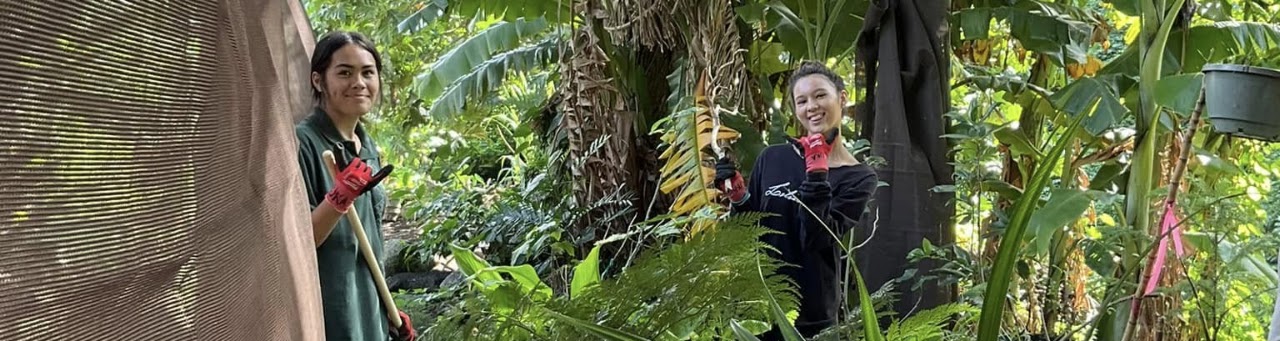
Each day begins with Wehena, a powerful morning gathering where the entire school community — students, teachers, and staff — forms a circle to chant, reflect, and listen to a student share their ancestral story and future aspirations. This grounding practice sets the tone for a day filled with academic and cultural learning. Students then move into small, tight-knit grade-level cohorts, where lessons are deeply connected to Hawaiian values, traditions, and the surrounding environment.

Two students tending garden beds in the rainforest, wearing gardening gloves
Stage 1 of 3: Part 1. Each day begins with Wehena, a powerful morning gathering where the entire school community — students, teachers, and staff — forms a circle to chant, reflect, and listen to a student share their ancestral story and future aspirations. This grounding practice sets the tone for a day filled with academic and cultural learning. Students then move into small, tight-knit grade-level cohorts, where lessons are deeply connected to Hawaiian values, traditions, and the surrounding environment.

00 / Design element

Clear Identity

Hālau Kū Māna's identity is deeply rooted in Native Hawaiian culture, values, and traditions, which shape every aspect of the school experience. Their vision is "to facilitate individual and community healing and empowerment by fostering lifelong learners who think, feel and act in ways that are pono (justice-oriented) and to recognize strengths and address challenges as they seek positive, systemic change in their local, regional and global communities."

The school's mission is to "foster a sense of esteem, stewardship and kuleana to the 'āina (connection and responsibility for the environment), our communities and ourselves, through grounding in the ancestral knowledges and practices of Hawai'i and the academic skills necessary to excel in the 21st century."

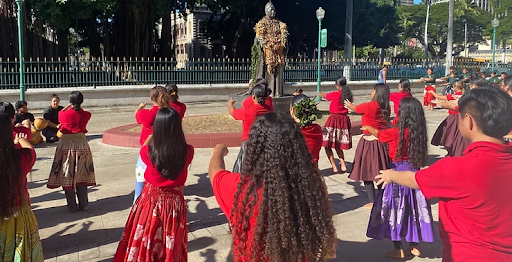
From the moment you step on campus, this clear identity is evident. When visiting, you will be welcomed at the entrance by every student and teacher through a powerful ceremony passed down from Hawaiian ancestors. Organized in formation and in beautiful harmony, voices rise together in a chant to share their message of aloha (love and respect). This ritual honors their cultural heritage and reinforces the shared sense of belonging and purpose among all who enter.

The individual identities of each learner is on full display during Spirit Days, a celebration created to increase inclusivity and belonging. During these days, students are encouraged to show their island pride by "dressing in your Makahiki team colors", and "come to school dressed in whatever you think native or invasive is" are two such examples.

A strong sense of responsibility is instilled in students, reinforcing the idea that their learning is not just for themselves, but for the good of their community and culture. As Ka'iulani so powerfully states, "if we don't share these stories of our songs, who will?" (senior, class of 2025). This sentiment reflects the school's mission to cultivate learners who understand their kuleana (responsibility) to preserve, share, and carry forward the knowledge and traditions of their ancestors.
01 / Design element

Small Learning Communities

Each morning at Hālau Kū Māna begins with a school-wide Wehena, an assembly that frames the day, which includes oli (harmonic chants) and is punctuated by a chosen student of the day who tells their ancestral story, how Hālau Kū Māna is impacting them, reverence for the adults in their lives who support them, and their plans for the future. Wehena means opening, unfastening, and taking off — a powerful metaphor for the shared experience. All 132 students and all of the teachers and staff form a close-knit circle under a gazebo, reinforcing the school's intentionally small and connected learning community.

Every morningWehena

All 132 students, teachers, and staff form a circle under a gazebo to chant, reflect, and hear one student share their ancestral story.

Students are further cohorted by grade level, with about 20 students per grade, ensuring that each learner receives personalized support and builds strong relationships with peers and teachers.

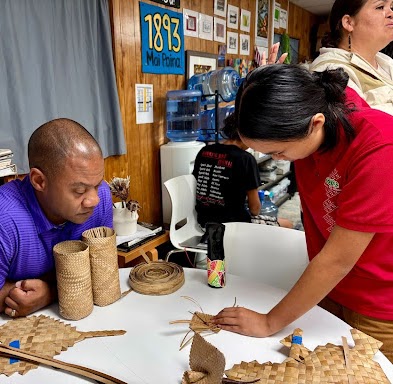
A student learning traditional Hawaiian weaving with a mentor

02 / Design element

Real-World Learning

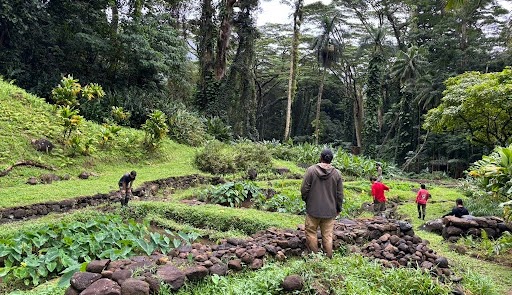
There's no better representation of the school's integration of real-world learning than the campus itself. Nestled in the rainforest hillside, classroom buildings rest on top of the land so as not to disturb it, and there is visibly more outside learning space than inside. Each grade participates in place-based projects and curriculum organized by theme to understand the relationship between the land, ocean, and people and what their responsibility is in that relationship.

  • 7th grade: O'ahu coastlines
  • 8th grade: upland food sovereignty
  • 9th grade: traditional sailing
  • 10th–12th: internships & advocacy

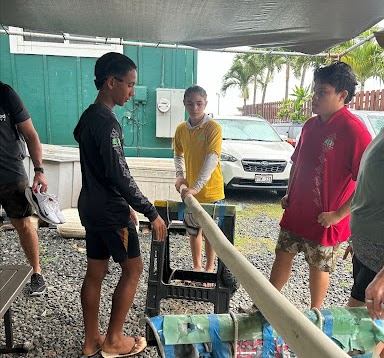
Every Wednesday, learners engage in meaningful learning and regenerative projects, both on and off campus, tied to their grade-level theme. Sixth grade students build a foundational understanding of the relationship between the land, ocean, and people and what their responsibility is in this relationship, which carries through learning in all subsequent grades.

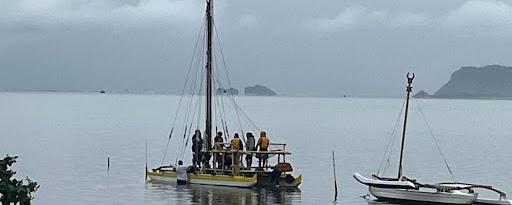
Seventh grade students spend time on the O'ahu coastlines learning about seasonal cycles and ocean resources; eighth grade students learn about protecting upland resources and building food sovereignty; ninth graders study traditional and modern sailing, including navigating the Hawaiian double-hull sailing canoe, Kānehūnāmoku.

10th–12th graders engage in projects related to sustainability, advocacy, and internships tied to their self-identity. Sophomores, for example, spend a semester learning and practicing Indigenous weaving techniques, progressing from simple to more complex artifacts — and learning to articulate the life skills that come with it: patience, learning at their own pace, coping with frustration, and taking pride in their work.

This real-world learning leads to real-world impact for learners. As seniors, learners are pushed to discover who they are, explore their passions, and investigate their community and world through internships. At Hālau Kū Māna, real-world learning grounds learners in the ancestral knowledge and practices of Hawai'i and the academic skills necessary to excel in the 21st century. You can see it every Wednesday in the school garden, in the rivers, on the ocean, and in the mountains.

03 / Design element

Teacher Collaboration

At Hālau Kū Māna, teacher collaboration is an essential part of creating a cohesive, learner-centered experience for students. Their schedule is designed to ensure educators work together across disciplines to design integrated, culturally grounded learning experiences that connect academics to real-world applications. Collaboration happens through regular planning meetings, shared projects, and interdisciplinary teaching. Teachers co-create assessments, reflect on student progress, and adjust instruction to meet the needs of each learner, fostering a culture of collective responsibility for student success. In fact, co-teaching is a staple in class spaces throughout each day.

04 / Design element

Performance Assessment

Success is measured through more than just tests and grade reporting; students demonstrate learning through authentic projects and practices. Since their learning is deeply connected to the land, community, and Hawaiian values, their assessments are designed to measure content knowledge, critical thinking, problem-solving, leadership, and cultural responsibility. Students showcase their learning through presentations, portfolios, and hands-on experiences.

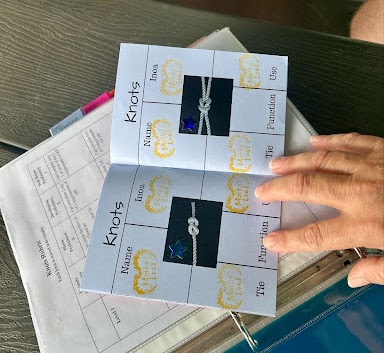
Competency trackingMaritime Skills Log

Students earn stamps for demonstrated mastery of traditional and modern sailing skills — navigation, weather, knots, safety — in place of conventional grades.

One powerful example is the Maritime Skills Log, a tool teachers use to track student mastery in the Voyaging History class — traditional and modern sailing practices, navigation, weather patterns, shipwork, knot tying, safety, and communication. Rather than relying on conventional grading, assessment is competency-based: as students progress, their achievements are marked with stamps in their Maritime Skills Log, a tangible record of their learning journey.

Another example is a year-long 8th grade multidisciplinary research project where learners choose a topic of interest that honors their cultural and native heritage and culminates in an Exhibition of Learning. Chosen topics are historical, cultural, and environmental, and the products include visual presentations and artifacts. The research includes visiting places of cultural significance and often at the immersive Bishop Museum, Hawai'i's premier natural and cultural history museum.

All learners develop a year-long partnership with a mentor expert in their chosen topic. Formative assessment tools are utilized frequently throughout, both through self-assessment and with peers and adults inside and outside of the ecosystem. Students are frequently reminded that they are caretakers of their cultural heritage and that by their very survival, they have the privilege of carrying that knowledge forward which explicitly and implicitly encourages students to seek excellence in their research.

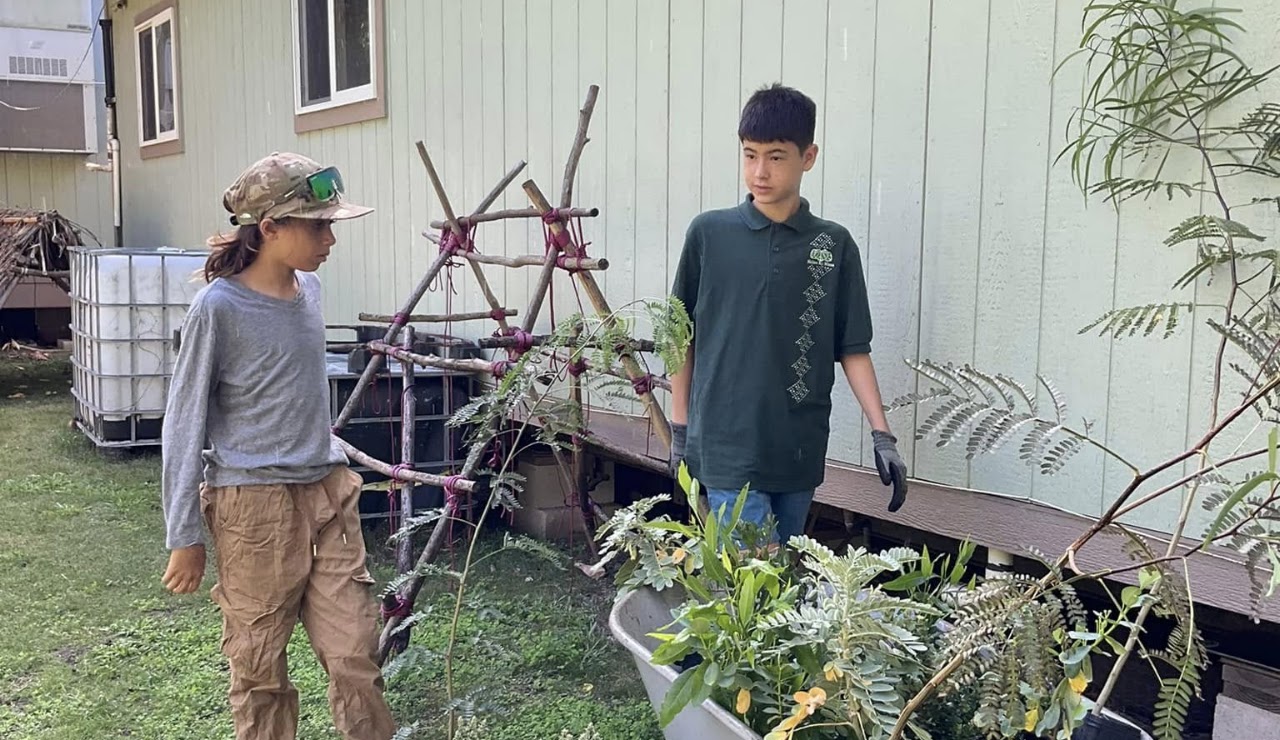
Two students building a garden trellis structure together outside a school building

05 / Design element

Distributed Leadership

There are structures that support and facilitate leadership across the ecosystem. Educators, learners, alumni, families, and supporters take on leadership opportunities and make decisions that create shared ownership and responsibility across the school.

Central to the school's identity is cultural and educational civic engagement, and the voices of families, alumni, and supporters are actively recruited to spread awareness of critical grant funding that realizes the school's mission. Many partnerships with cultural organizations and experts exist to ensure 'ike kūpuna (ancestral) knowledge is passed down and integrated into daily learning. Students take on leadership roles such as running morning protocols, engaging in peer-to-peer feedback, and demonstrating agency while teaching one another.

Students carrying a long maritime pole together as part of a hands-on project
More Resources

Continue exploring the ideas and examples behind this structure.