Imagine what is possible

Phase 2: Design & Plan

Once a school community has established its goals and built shared aspirations through listening and inspiration, the next step is turning those insights into a vision and a cohesive plan. In this phase, Design Teams envision what the school will be, leaning into Learner-Centered School Design Structures to rethink use of time and space and what teaching and learning looks like, crafting a 3-5 year implementation plan.

Turn vision into a plan

Design what's possible.

Shape a learner-centered vision and translate it into a practical plan for implementation.

1 of 3 sections open

01 / Phase 2 step

Define An Identity

District or system-level vision, mission, and values statements, along with a Portrait of a Learner, form the foundation for a coherent and compelling North Star. Together, they clarify the system's purpose, describe the future it is working toward, and identify the principles that will guide decisions. These statements are critical for establishing direction, coherence, and shared accountability across a district.

“The district vision should serve as the unifying anchor for all schools within the system.”

Importantly, the district vision should serve as the unifying anchor for all schools within the system. While each school should not create its own separate vision, mission, and values, every school can and should develop its unique *identity*—the way it brings the district's vision to life in its context. A clear school identity expresses how the district vision is enacted through local priorities, partnerships, and learner experiences, ensuring both coherence across the system and relevance within each community.

Developing these identity statements should be a collaborative process that includes educators, learners, families, and community members. When co-created, they authentically reflect shared aspirations and serve as a living guide for decisions, helping each school community stay grounded in purpose while designing for its learners' needs.

During this phase, the Design Team identifies the core principles of the school. Some schools identify a mascot, such as the VIDA Sharks who are guided by what they affectionately call "GILLS", which define how they operate as a design thinking-focused school. Other schools anchor on something important to their community such as the natural environment at SEEQS, the School for Examining Essential Questions of Sustainability. Not only is this identity part of their name, but they have a core project with dedicated time in the schedule each semester focused on these essential questions. Schools like Hālau Kū Māna, an indigenous Hawaiian school, anchor on caring for the earth and reigniting indigenous ways of living and practice. This shows up in how they start the morning, with olis (chants) and how they spend one day a week working in the community.

Read more about establishing a clear school identity here.
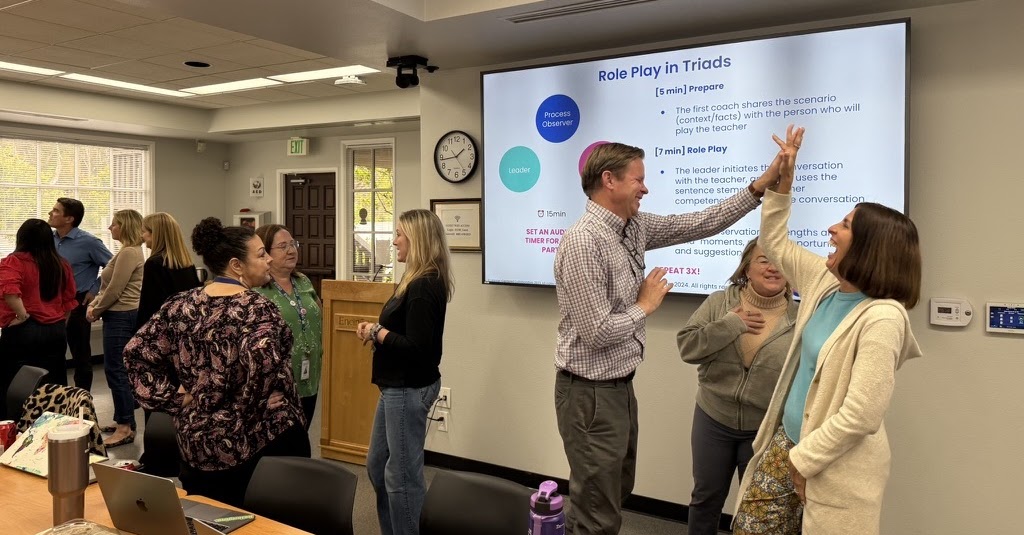
A presentation or training session about defining school identity
Students, parents, teachers, and staff from Keith McCarthy Academy's Design Team gathered to co-design
Students, parents, teachers, and staff from Keith McCarthy Academy's Design Team in Lake Elsinore Unified School District gather to co-design.

02 / Phase 2 step

Design for Learner-Centered Structures

With the identity clearly established, school Design Teams turn to the Learner-Centered School Design Structures that will bring their identity to life. These structures shape how teaching, learning, and community function each day, and, when designed intentionally, they ensure that the learner-centered vision is more than words on paper.

“Bringing a redesign plan to life is an iterative process that requires the entire school ecosystem or community.”

Each school will approach these structures differently, but when they are holistically addressed in alignment with the established identity, they create the architecture that enables educators to create a learner-centered community, with personalized, authentic, and competency-based learning experiences to achieve a school's vision for learners. The planning phase is about naming which structures will be prioritized, how they will connect to the school's identity, and which early prototypes will create the conditions for meaningful learning and change.

Read more about each of the 5 structures and how different schools have approached bringing that structure to life here.

03 / Phase 2 step

Create a 3–5 Year Blueprint for Implementation

Planning for redesign requires both vision and pragmatism. A 3-5 year Blueprint maps out the major shifts a school will undertake, organized into sequenced goals and milestones. This plan should include:

  • Big Moves: The bold changes that will reimagine learning.
  • Early Wins: Smaller, achievable actions that build momentum and confidence.
  • Success Indicators: Ways schools can measure progress toward their redesign goals and make informed adaptations.
  • Ownership: Clear roles and responsibilities for each initiative, often using shared leadership models to distribute accountability across staff.