Better together
Teacher Collaboration
Educators have regular, structured time during the work day and throughout the year to learn together and collaborate. The time is used to learn and apply new strategies, co-design interdisciplinary projects and learning experiences, reflect on implementation, review data, and create plans to support learners.

Design39Campus
At Design39Campus, Learning Experiences Designers (LEDs, otherwise known as teachers) spend significant amounts of time collaborating. Every morning for one hour before students arrive, a pod of LEDs come together in their dedicated collaboration space, called Design Studios, to design learning experiences, look at student work, discuss challenges, and create solutions together. In a study done on relational trust at Design39 showed that over 70% of LEDs felt isolated in their classroom before coming to Design39.
One LED shared: "Before, if I wanted to do a project, I had no thought partners, I had no one to bounce ideas off of. It doesn't matter how supportive your administration is. It's just really hard to do alone." Another LED built on this and shared, "When I think about instruction, I think about how many standards can I merge into an experience? Many of the standards overlap. You can't integrate and create experiences that nurture deeper learning on your own. You need the different lenses of STEM, History, and English. They shouldn't say this is this subject or this is that one. They should have flow throughout the day, and that's what we can create when we are working together."
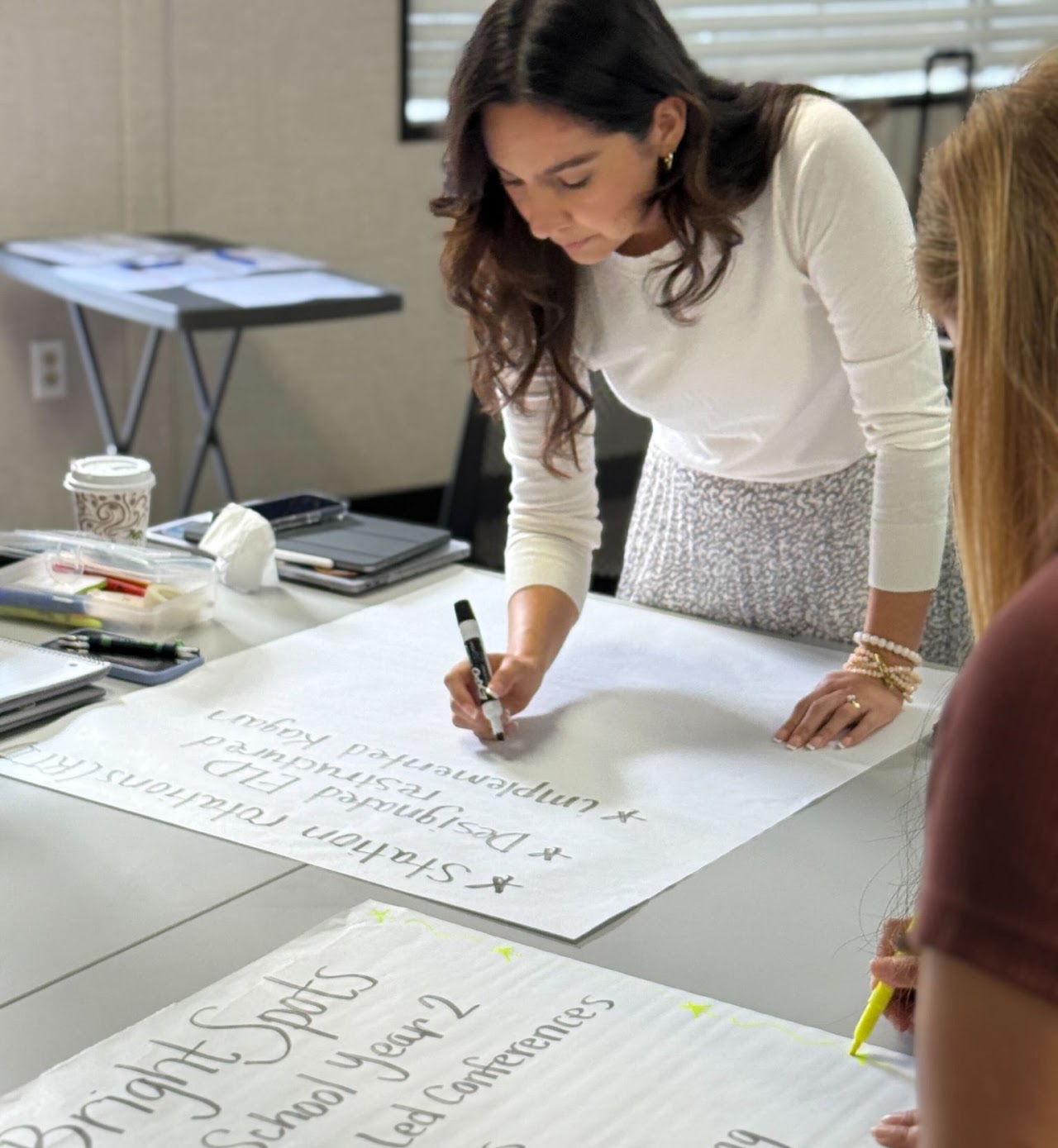
“Before, if I wanted to do a project, I had no thought partners, I had no one to bounce ideas off of. It doesn't matter how supportive your administration is. It's just really hard to do alone.”— Learning Experience Designer at Design39Campus

Chico Country Day School
At Chico Country Day School (CCDS), a TK-8 Charter School in Chico, CA, teachers meet as an entire staff during early release on Mondays and two times per week during the school day grade-level teams. This level of collaboration allows them to plan grade-level projects, look at student work, and plan for interdisciplinary projects at both the elementary and middle school level. It also contributes to greater coherence across the school. This dedicated time allows for shared understanding of student outcomes everyone is striving for and the teaching practices that bring those outcomes to fruition with students.

Hillsdale High School
At Hillsdale High School, teacher collaboration is built into the DNA of the school day through a carefully crafted schedule and shared norms. Teachers are given common prep periods and "collaboration blocks" so that content teams, house teams, and advisory teachers regularly meet to co-plan lessons, design cross-disciplinary units, hold "kid talk" conversations, and reflect on student work.
The master schedule supports this by staggering blocks and carving out time for professional development (during school hours) rather than solely relying on after-school or summer break. Houses (Small Learning Communities) also play a big role: teachers within each house know their students well and coordinate with each other to align learning, share student data, and personalize instruction. These collaborative structures are seen as essential for improving instructional quality, strengthening teacher efficacy, reducing isolation, and maintaining a culture of shared responsibility for student outcomes.
Continue exploring the ideas and examples behind this structure.