The context
VAVPA Redesign Story
Watch this video to learn more about a day in the life of a VAVPA student, why they chose to redesign their school and how the School Design Structures came to life in their redesign process:
Watch
School profile

Vista Academy of Visual and Performing Arts (VAVPA) is a K-5 IB World School located in Vista, CA. It is a magnet arts program that serves approximately 700 students, about 35% of whom are English Language Learners.
How VAVPA redesigned
VAVPA weaves the IB Primary Years Programme through daily arts integration — building a school where every child's creative and intellectual potential is developed together.
The context
Watch this video to learn more about a day in the life of a VAVPA student, why they chose to redesign their school and how the School Design Structures came to life in their redesign process:
00 / Design element
VAVPA has built a strong identity around developing the intellectual, emotional, and artistic potential in every child. Guided by a vision to be a model of educational excellence through arts integration and intercultural understanding, the school places personalized learning and inquiry at its core. This identity is operationalized through a high-quality, flexible curriculum, clear accountability for all learners, and strong family and community partnerships. It is also represented in the school schedule that makes time for learners to participate in regular dance, music, drama, and art classes in addition to Spanish enrichment.
01 / Design element
Daily morning meetings and thoughtfully designed physical spaces allow students to form meaningful connections with peers and educators. By reframing discipline and centering relationships, the school nurtures a culture where every child feels known and supported. This relational foundation is especially vital for their diverse student body, which includes high percentages of English learners, students with disabilities and students from historically underserved backgrounds.
02 / Design element
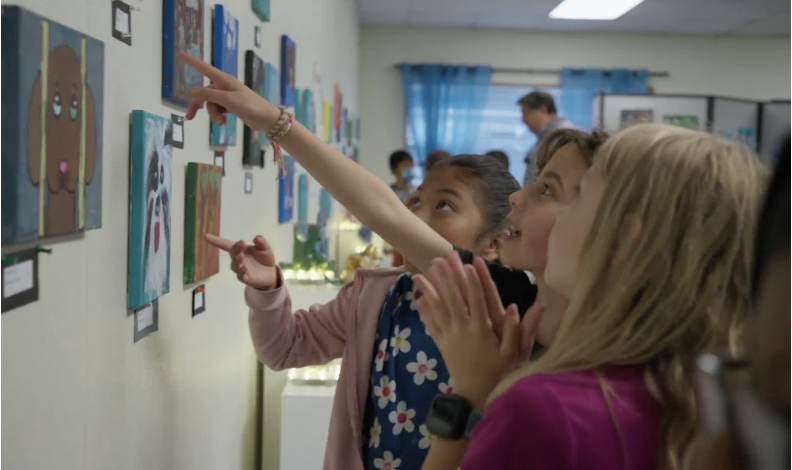
Through its International Baccalaureate (IB) Primary Years Programme, VAVPA ensures learning extends beyond the classroom. The Programme of Inquiry engages students in transdisciplinary themes that encourage them to see connections between their studies and the real world—from exploring identity and human relationships in second grade to pursuing more in-depth projects by fifth grade.
The school has spent considerable time and effort to create a cohesive inquiry-based learning program that has vertical articulation from K-5:
Mentorship and career pathways exploration further connect learners to community partners and authentic learning. Students develop critical skills and gain agency as problem-solvers prepared to navigate and contribute meaningfully to society.

03 / Design element
Portfolios are curated by students from K-5. According to the VAVPA Assessment Philosophy: "These collections of student work are designed to demonstrate success, growth, higher-order thinking, creativity, and reflection over time. They contain authentic reflections of the whole child as a learner and help provide an overview of the student's years in the IB PYP (Primary Years Programme) at Vista Academy. The portfolio contains a section for each grade level with samples from each of the 6 IB PYP Transdisciplinary Themes and a piece of work (project, summative assessment task, performance, etc.) is included in each section each school year. Students may also include artwork and reflections about the IB Learner Profile."
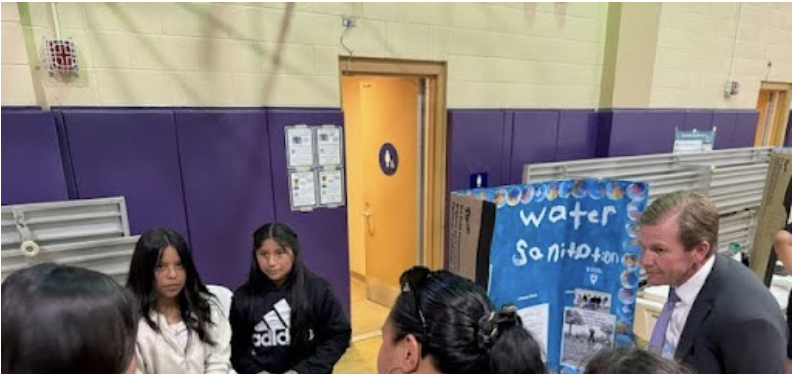
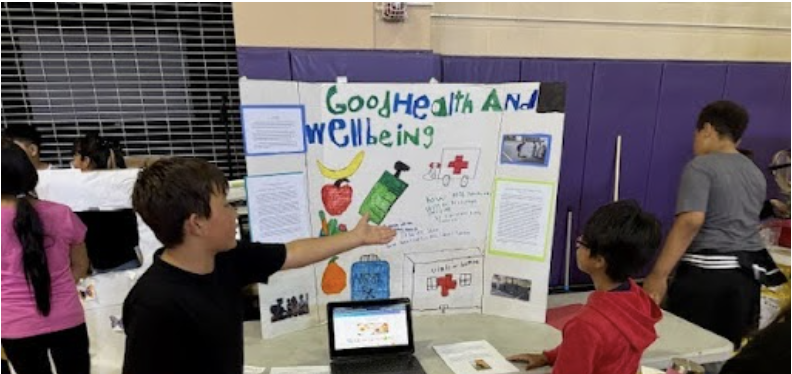
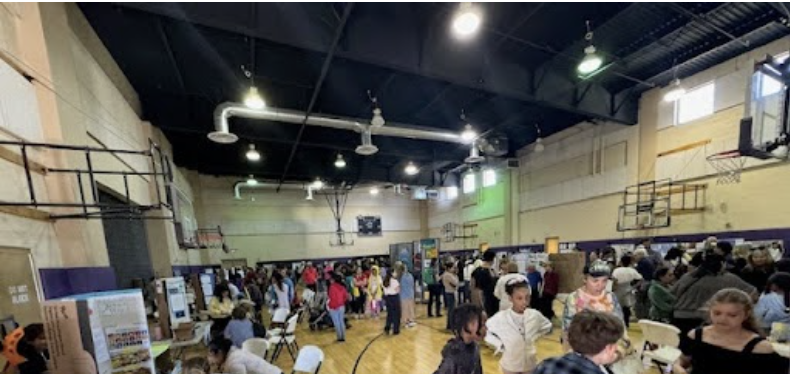
The 5th Grade Exhibition of Learning serves as a capstone, requiring students to demonstrate attributes of the IB Learner Profile through an inquiry project. They set goals, collaborate with peers and teachers, and present their findings to authentic audiences. This approach emphasizes process as much as product.
In addition, all students participate in student-led conferences, once a year in K-2 and twice a year in 3-5. In these conferences, they share their progress and reflections with families and teachers.
04 / Design element
VAVPA's success is built on robust teacher collaboration. The schedule supports 2 hours of structured interdisciplinary planning and collaboration time as well as coaching cycles weekly. The school uses data-informed approaches and professional learning plans to ensure that teachers grow alongside their students. This culture of collaboration makes innovation sustainable and positions educators as partners in driving the school's vision forward.
05 / Design element
Leadership in VAVPA, and across the district in Vista Unified, is intentionally shared. Teams such as MTSS/RTI and PBIS ensure that responsibility for the school's direction and improvement is not limited to administrators but distributed across staff to make sure that these committees are not 1 more thing but thoughtfully leveraged to achieve the vision.
By engaging teachers, families, and students in leadership roles, VAVPA creates a culture of collective ownership. Student-led councils and advisory bodies give learners a voice in shaping the school environment, reinforcing the belief that leadership is a shared capacity, not a position.
Continue exploring the ideas and examples behind this structure.