School profile

Mission Vista HS

Mission Vista High School, located in Oceanside, California, opened in 2009 and is a dual-magnet, choice high school in the Vista Unified School District. It currently serves approximately 1,700 students.

How Mission Vista redesigned

A school designed around personalization.

A surge in enrollment pushed Mission Vista to rethink its pathways — building a school where every student's strengths shape their learning.

1 of 8 sections open

The context

A Day in the Life

A day at Mission Vista High School begins with students diving into one of their four block classes, where extended time allows for deeper learning and hands-on projects connected to their chosen pathway in Arts & Communication or Science & Technology.

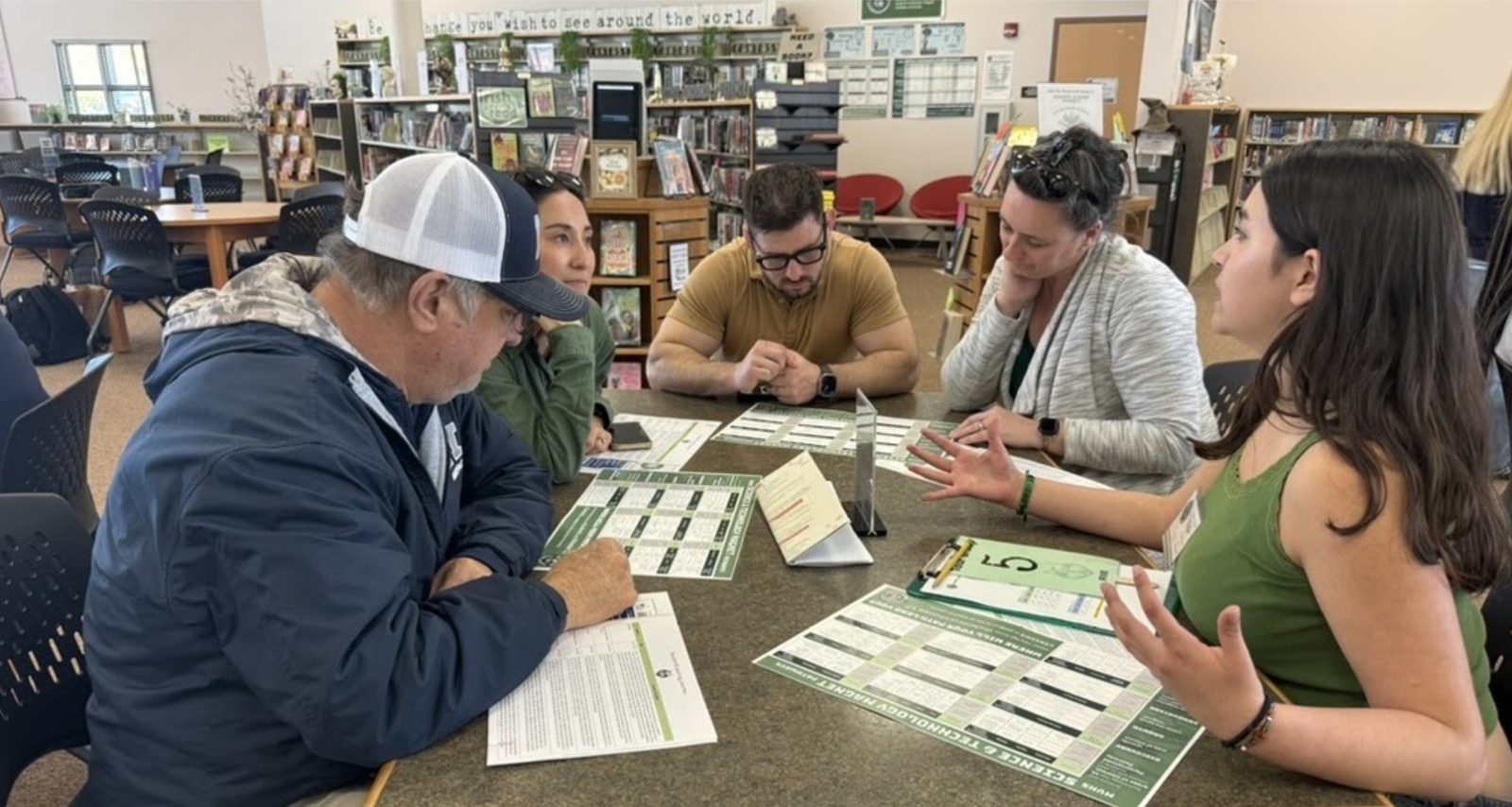
Mission Vista High School students and staff reviewing pathway planning materials together in the library
Stage 1 of 4: Part 1. A day at Mission Vista High School begins with students diving into one of their four block classes, where extended time allows for deeper learning and hands-on projects connected to their chosen pathway in Arts & Communication or Science & Technology.

The challenge

School Redesign Goals

During the 2014-2015 school year, Mission Vista experienced a dramatic increase in student population. The school grew by approximately 400 students over one summer, and the teaching staff expanded to accommodate the increase in students. With a large group of new staff members, all of whom brought their own unique talents and interests, Mission Vista leadership and faculty members recognized an opportunity to leverage the block schedule and zero in on the course pathway offerings available to students.

The rapid growth of the school and expansion of course offerings also signaled that it was time for the school to refine its vision, mission, and values statements to ensure these statements aligned with the new identity of the school and the work that Mission Vista was doing in service of its students. The primary objective of this work was to enhance the student experience during their time at Mission Vista, and to help students to see more relevance, authenticity, and purpose in each of their classes.

In 2016-2017, site leadership, in conjunction with lead faculty members, adopted Personalized Learning as the school's learning engine, which emphasized understanding students strengths, interests, and talents, and finding ways to allow students to leverage those in their learning. New pathways of study emerged in each of Mission Vista's magnet themes, Arts & Communication and Science and Technology, and teachers began emphasizing student voice, choice, co-creation, and relevance into daily lessons and learning tasks. Since then, Mission VIsta has continued its learning journey, iterating schoolwide goals and initiatives each year to bring learning to life for students.
Quote: "The primary objective of this work was to enhance the student experience during their time at Mission Vista, and to help students to see more relevance, authenticity, and purpose in each of their classes."
Mission Vista High School staff meeting around a table in the library to plan the redesign

01 / Design element

Clear Identity

MVHS is a career pathways high school that emphasizes personalization based on students' strengths, interests, and values. Their vision is to be the model of educational excellence through discovery, innovation, and growth. Their mission is to empower students to be self-directed, creative, and critical thinkers who persevere to positively impact the interconnected world.

02 / Design element

Small Learning Communities

Although Mission Vista is a large, comprehensive high school, teachers and administrators make an intentional effort to ensure that all learners are known and seen by adults in the building, developing relationships and creating community. They have developed a program, Risk Rater, where they use research-backed indicators that impact student achievement to identify a list of students who are at risk of earning failing grades and therefore using course choice opportunities to remediate courses for graduation requirements. Each student on the list has a one-on-one check-in with an administrator or counselor to support their needs and additional audits and student focus groups have been conducted to ensure all learners are supported to reach graduation.

03 / Design element

Real-World Learning

MVHS offers a robust Career and Technical Education (CTE) pathways program designed to give students meaningful, real-world learning experiences. With a variety of pathways, students can engage in rigorous coursework that connects directly to future college and career opportunities. Each pathway is structured as a two-year experience, allowing students to pursue multiple options during their time in high school and explore different interests before graduation.

MVHS's block schedule further supports this flexibility, creating space in the afternoons for students to participate in internships off campus and other work-based learning experiences that bring their classroom learning to life. This thoughtful design ensures students gain academic knowledge and develop the skills, confidence, and professional connections they need to thrive beyond high school.

In addition to the pathway courses, teachers across the school incorporate real-world learning into their learning experiences by incorporating the RIASEC framework or providing students choices on how they engage with projects to make them more personal. Read more here.

Quote: "This thoughtful design ensures students gain academic knowledge and develop the skills, confidence, and professional connections they need to thrive beyond high school."
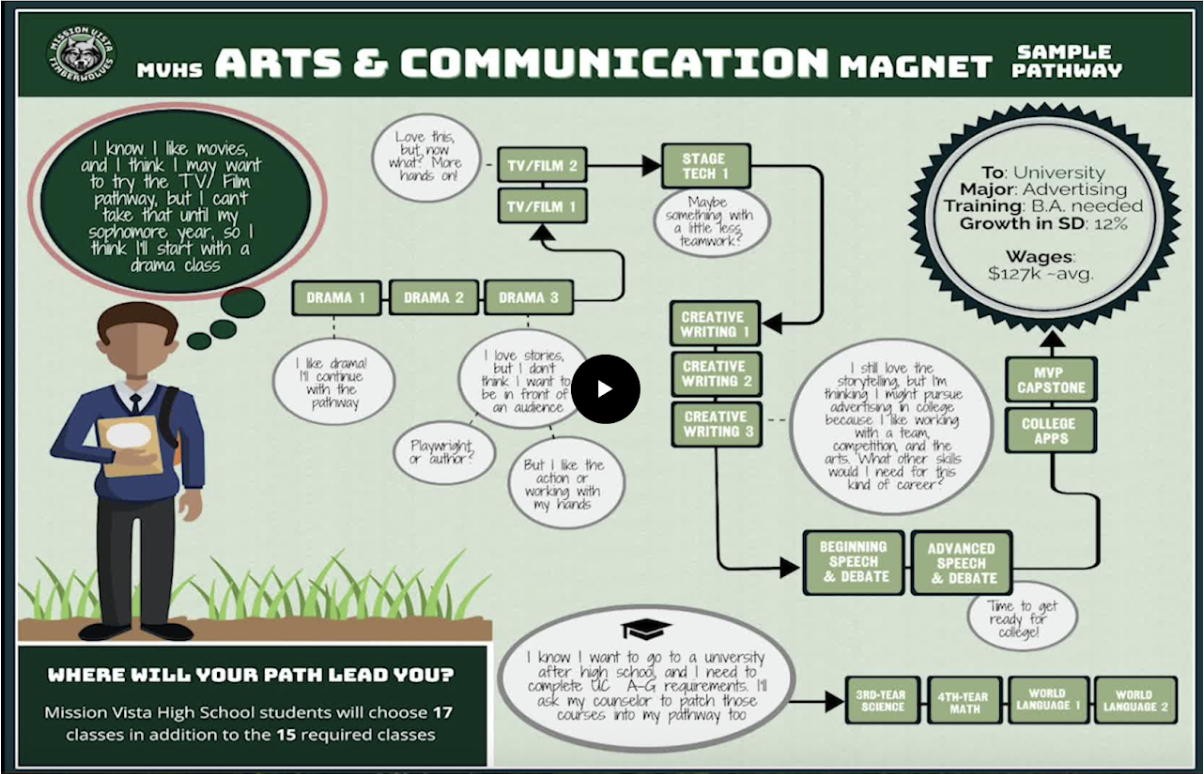
An illustrated diagram of the MVHS Arts & Communication Magnet sample pathway

04 / Design element

Performance Assessment of Whole-Learner Outcomes

MVHS students participate in the My Vision Personalized senior capstone project, which asks students to demonstrate learning aligned with their strengths, interests, and values in authentic, performance-based ways. Students who take the course submit a proposal for their project and then create their own rubric, such as this one from a project where a student composed their own music.

In addition, MVHS has been focused on creating more intentional grading practices. A committee of teachers and families have been researching best practices with assessment and developing guidelines for grading that the teachers can collectively follow to make assessment more focused on student growth and learning than compliance or completion of tasks.

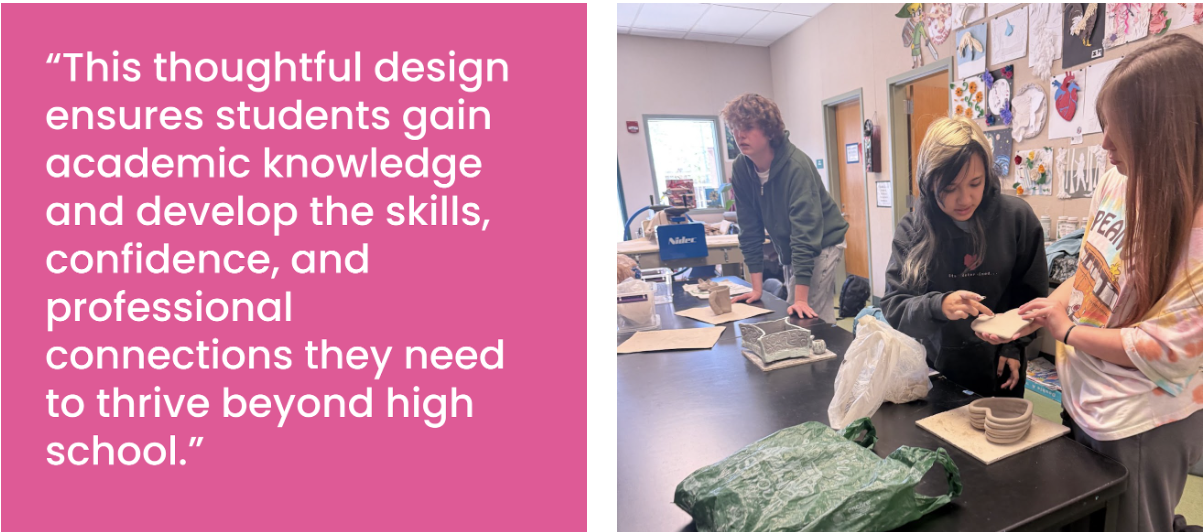
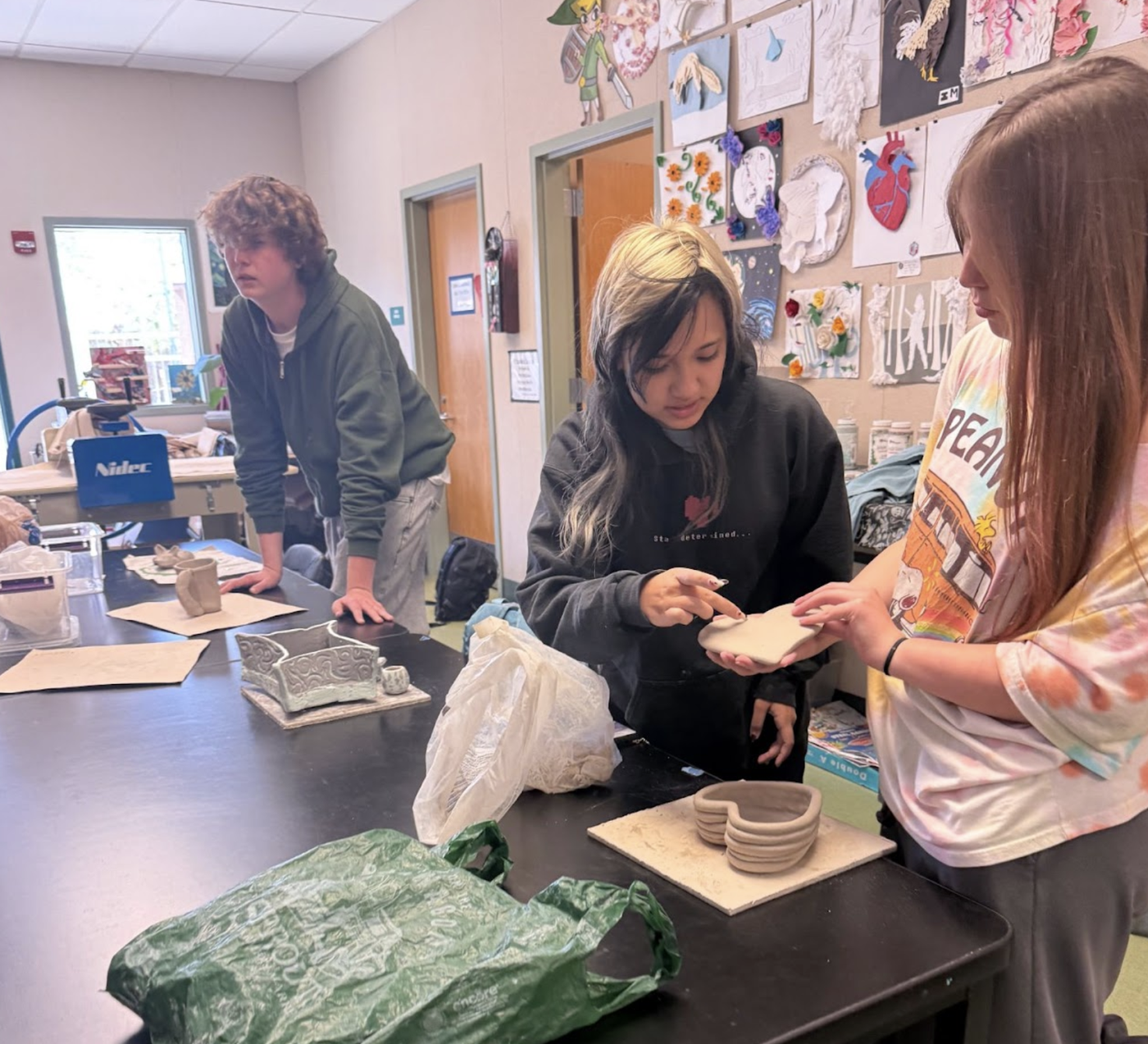
Mission Vista High School students working with clay in a ceramics classroom

05 / Design element

Teacher Collaboration

Teacher collaboration is explicit and structured. MVHS has active usage of PLCs (Professional Learning Communities), with department chairs and PLC leads who help set goals, monitor progress, co-plan lessons, and problem-solve together. The school also aligns its professional learning calendar to its school-wide goals (for instance, equitable grading practices) so that what teachers are learning and collaborating about ties directly to what students are experiencing.

06 / Design element

Distributed Leadership

Leadership is shared across MVHS. Teacher-leaders (department chairs, PLC leads) are involved in setting and tracking school goals, including Wildly Important Goals (WIGs) that align with the school's mission and vision. They also have committees, made up of teacher leaders, students, and families such as the equitable grading committee, that meet to discuss recommendations for the school throughout the year.