Belonging by design
Small Learning Communities
Learners belong to multi-age small groups organized by a caring adult. These groups create a sense of community and support social, emotional, and academic development. These structures are sometimes called advisory, crew, teams, or houses. Another way to think about small learning communities is to rethink cohorts of students and educators to create small learning communities across classes in a larger school building or to cohort students in ways other than grade level.

Bostonia Global High School
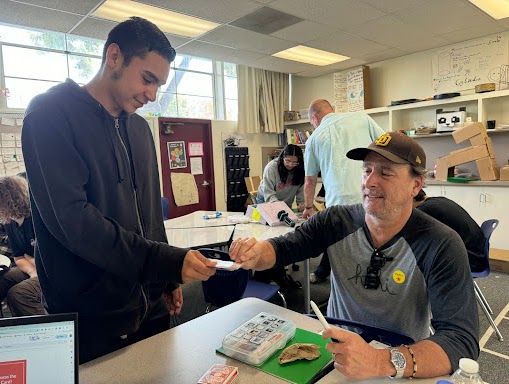
Advisory at Bostonia Global High School is an intentional design element modeling the shift from the current industrial schooling model to a focus on each individual's development. Every adult in the system is called an advisor to make clear the priority of building relationships serving as mentors supporting each student — is assigned a primary Advisor, who mentors them throughout their journey at the school, in a mixed grade advisory group. Advisories are an organizing principle of the school, meeting for 8 hours weekly, focusing on relationship development, cultivating scholar interests, and exploring careers through the Cajon Valley Unified School District's World of Work program.
“Rethink cohorts of students and educators to create small learning communities across classes in a larger school building or to cohort students in ways other than grade level.”
Conway Academy of Expeditionary Learning
At Conway Academy, an Expeditionary Learning (EL) school serving K-5 in Escondido, CA, Crew, their advisory structure, is a core part of the culture. As a student shared, it "is the heart of everything we do at Conway. It makes me feel like I'm a part of something really big. It's like a big community and a family."
Conway Academy of Expeditionary Learning, Escondido Union School District

Mountain View High School
With the goal of ensuring every student felt a sense of belonging, Mountain View High School, part of Mesa Public Schools in Arizona, introduced teaching teams of 3-4 educators supporting a cohort of 90-120 students in a grade level. Serving a total of 3,400 students the school has 10 teams for the entire 9th grade.
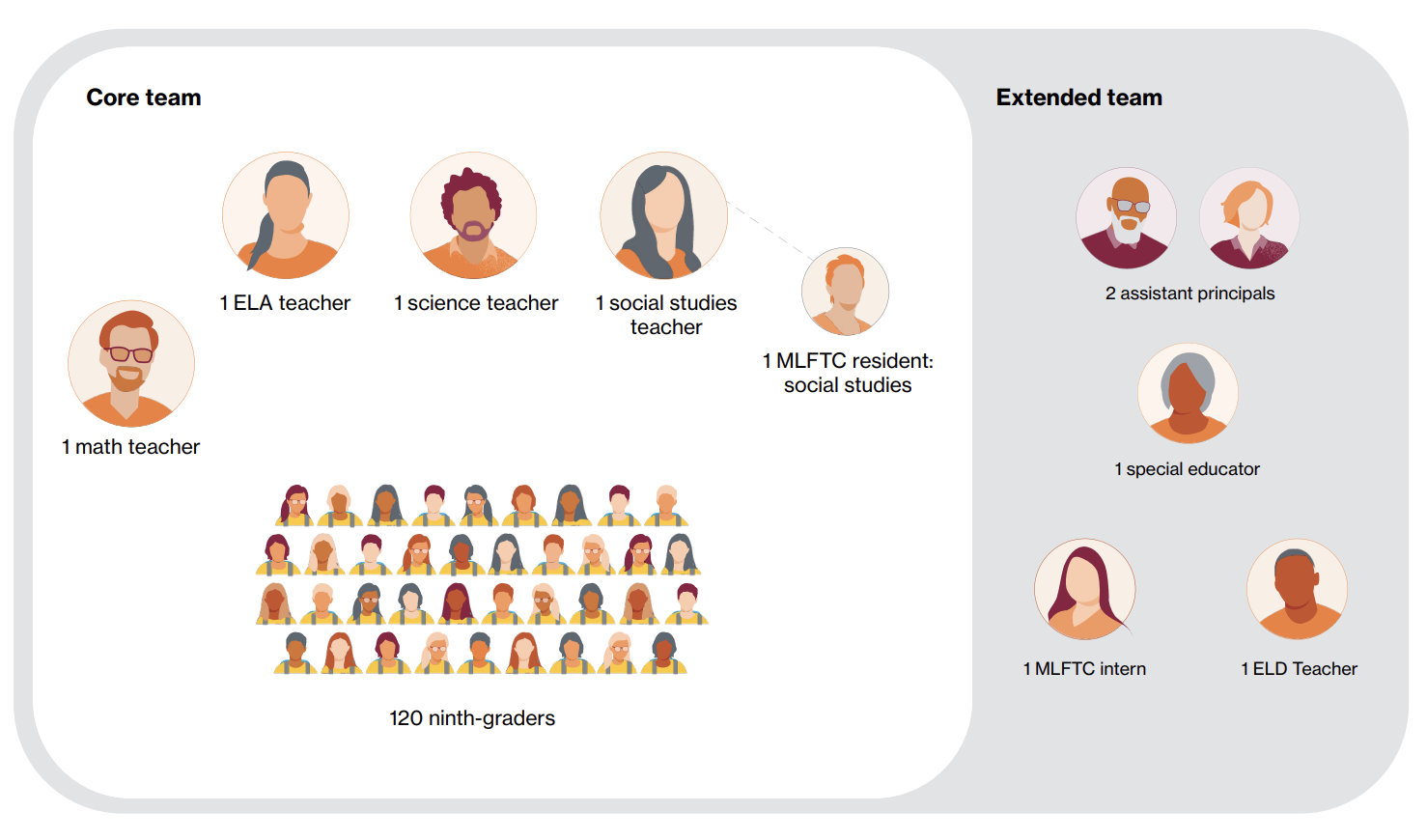
“Students served by educator teams reported a greater sense of belonging at school, demonstrated higher passing rates, and showed improved year-over-year performance.”— A Study by ASU Next Generation Workforce
Continue exploring the ideas and examples behind this structure.