Wisdom from the work
Tips from Leaders
The site and district leaders we've worked with in the school redesign process have all stressed the importance of a shared purpose, engaging the entire school community, and a collaborative design process. It is a multiyear, iterative process that requires leaders and Design Teams to stay focused on that shared purpose in order to realize the learner-centered changes that learners deserve. Here are 9 tips gathered from the experiences of past and current school design leaders to keep in mind as you embark on the school redesign process:
1. Keep Listening & Design Together
Students, families, and teachers don't always feel heard. Engaging them in the redesign process from the very beginning and throughout the process by listening to their input, going back to them for feedback, and even bringing them into the decision-making process itself is key for sustained change.
2. Expect and Navigate Resistance
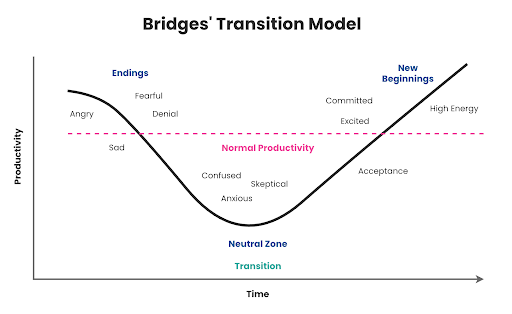
Many hallmarks of change management apply to the redesign process. Some staff jump in eagerly, others go along slowly, and some may resist the change entirely. Leaders must normalize this, provide reassurance, and maintain consistent messaging that the work is real, supported, and co-created with the community rather than top-down. Leveraging William Bridges' model for Managing Transitions can help with the psychological and emotional aspects of change. Bridges distinguishes between change and transition: change is situational, while transition is the internal process individuals go through as they adapt to new situations. His model outlines three stages: (1) Ending, Losing, and Letting Go, (2) The Neutral Zone, and (3) The New Beginning.
Managing transitions effectively is critical when moving to a learner-centered system. Leaders must recognize and address the loss and uncertainty that some educators might feel when old practices are replaced. Providing support and guidance during the neutral zone, where old routines have ended and new ones are not yet fully established, helps individuals adjust. Celebrating new beginnings and reinforcing new roles and processes solidify the embrace of the new learner-centered model. In addition, leaders must acknowledge that different staff and community members will be at different phases at different times. What may feel like a new beginning to some, especially those members of the Design Team who have been integral to the process from the start, may feel like the end to others. Navigating these different points along the transition is critical to bringing the entire team along.
Finally, even the most committed leaders, educators and community members will need assurances that redesign commitments are being adopted with the long-view in mind and that learner-centered systems are not simply the latest in a series of new approaches and ideas.
Bridges' Transition Model
3. Manage Practical Barriers
Workload, schedules, and union concerns often make redesign feel like an add-on. Without clarity on time, staffing, and logistics, promising ideas can stall. Expect the complicated logistical aspect of the redesign process and work to prioritize how to alleviate the most important concerns, making time for the Design Team and the community to grapple with big questions and truly co-create the next steps.
"Although many people will say that they want these changes… once they get into it, there will be challenges… even from the people who said they wanted it the most." — Tyler Thigpen, *CEO, The Institute For Self Directed Learning*
4. Handle Politics and Governance Wisely
In district contexts, boards, superintendents, and state mandates shape what's possible. Leaders need to secure top-level commitment, align governance decisions early, and prepare to weather political headwinds without losing direction. That will likely involve feedback loops, and at a certain point, it is important for district leaders, whether board members or cabinet, to hear from the Design Team. At Escondido Union, each site Design Team pitches the board on their proposed school redesign plan and then continues to keep the board updated on their progress. This creates clear feedback loops and important information is elevated across the community.
5. Invest in Adult Learning
Many redesigns demand teaching and learning practices that deviate from what teachers, new and veteran, are used to. Districts may need to develop long-term professional learning plans so that educators can grow the skills needed to implement the redesign. Communicating that this is part of the plan may even help alleviate some concerns around change.
"You want to re-energize your staff. You want to revisit this idea of why you're doing what you're doing: Why are we doing teaching and learning?" — Dr. Laura Philyaw, *Assistant Superintendent, National School District*
6. Pilot & Plan for Iteration
Don't be afraid to start small. Change thrives when leaders establish cultures of feedback and continuous improvement. Piloting changes in one grade or one teaching team, combined with protocols for reflection, help Design Teams understand what works and what doesn't. That, in turn, helps build momentum toward your vision. Throughout the planning and designing phase, teams can implement small prototypes or pilots to experience early wins, and to help understand what works and what might need to be adjusted during full implementation.
7. Form Strong Partnerships
Collaborations with local organizations, businesses, and networks provide a range of opportunities for learners and educators, from internships to real-world learning. Partnerships can also anchor redesign in broader community priorities, creating a sense of shared ownership and accountability.
8. Measure What Matters
Test scores should remain part of the picture but not the sole focus. Developing a balanced list of success metrics aligned to the goals of the redesign process and the school design structures helps keep the system focused on broader learner-centered outcomes, and it also helps weather a potential dip in traditional metrics as changes take root.
"The test scores are … now one star in a constellation." — Andy Johnsen, Ed.D., *Superintendent, San Marcos Unified School District*
In Escondido Union School District, Rose Elementary set a redesign goal of creating multiage PODs anchored by caring adults that cultivate belonging, supportive peer relationships and positive school culture. The success metric they set for themselves was that after one year of implementing this new structure, 80% of students and staff feel a sense of connection through their PODs, measured by a survey.
At Bear Valley Elementary, the Design Team set a goal of assessment and reporting reflecting how learners grow on the Learner Profile. The success metric they are looking to achieve is that at the end of the first year of implementing the new school structures, all students will complete a digital portfolio demonstrating how they exemplify each Learner Profile outcome. These success metrics move beyond traditional metrics, such as attendance and test scores, which are still being measured and attended to by the schools and district, to focus on leading indicators of successful implementation of learner-centered school structures.
9. Care for Yourself and Stay the Course
Redesign is a process that involves setbacks, anxiety, and often pressure to revert back to the way things have always been done. Anchor your work in your purpose, surround yourself with support networks, and remember that reaching the eventual goal: learners with agency, joy, and a sense of belonging, makes the evolution necessary and the struggle worthwhile.
"You want to re-energize your staff. You want to revisit this idea of why you're doing what you're doing: why are we doing teaching and learning? That's what you tap into by going through this process of school redesign….that often gets lost in the logistics and the planning is this is invigorating work." -Laura Phillyaw